
Hyperline Makes Its Debut at CIOE, with Three Laser Product Matrices Telling a New Story of Domestic Lasers
On September 9, the 27th China International Optoelectronic Exposition (CIOE) opened at the Shenzhen World Exhibition & Convention Center. As a new vehicle for Hisense Group's expansion into the industrial laser sector, Hyperline presented its three major product lines — diode lasers, ultrafast lasers, and fiber lasers — in a single showcase, using full-chain self-developed results to tell a new story of domestic lasers in China's laser industry amid the wave of AI and high-end manufacturing.
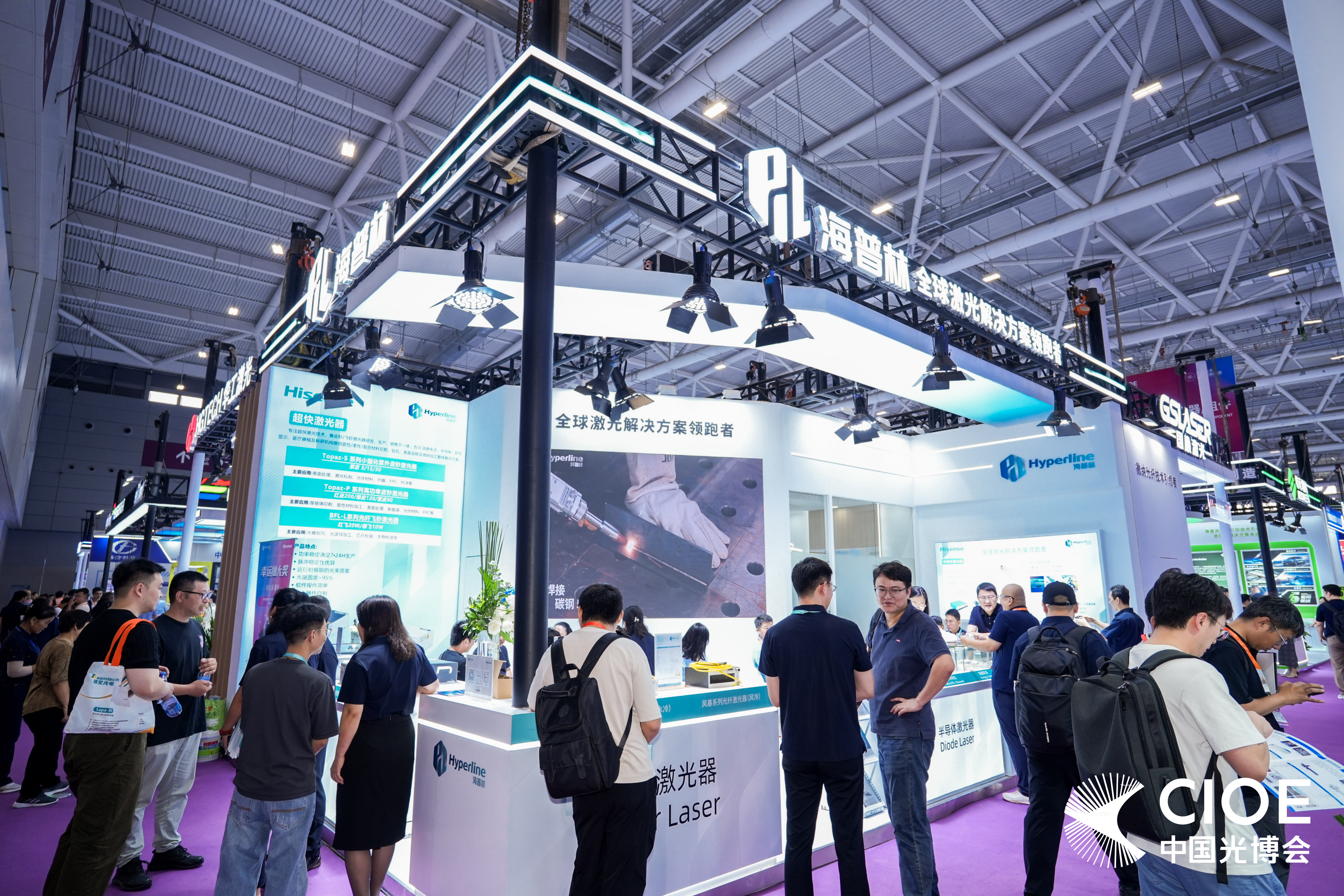
Against the backdrop of AI computing power, new energy, and semiconductor precision processing continuously driving demand for laser light sources, China's laser industry is moving from component assembly toward self-reliance and controllability in underlying devices. Building on its deep expertise in diode pump source technology, Hyperline adheres to a vertically integrated R&D approach, closing the loop of in-house development and production from pump sources to complete laser systems. Its three product matrices span from devices and pump light sources to complete machines for industrial processing, with power ranging from the milliwatt level up to 200 kW, providing integrated light source solutions for diode manufacturing, new energy, 3C micro-processing, healthcare, additive manufacturing, and other scenarios.
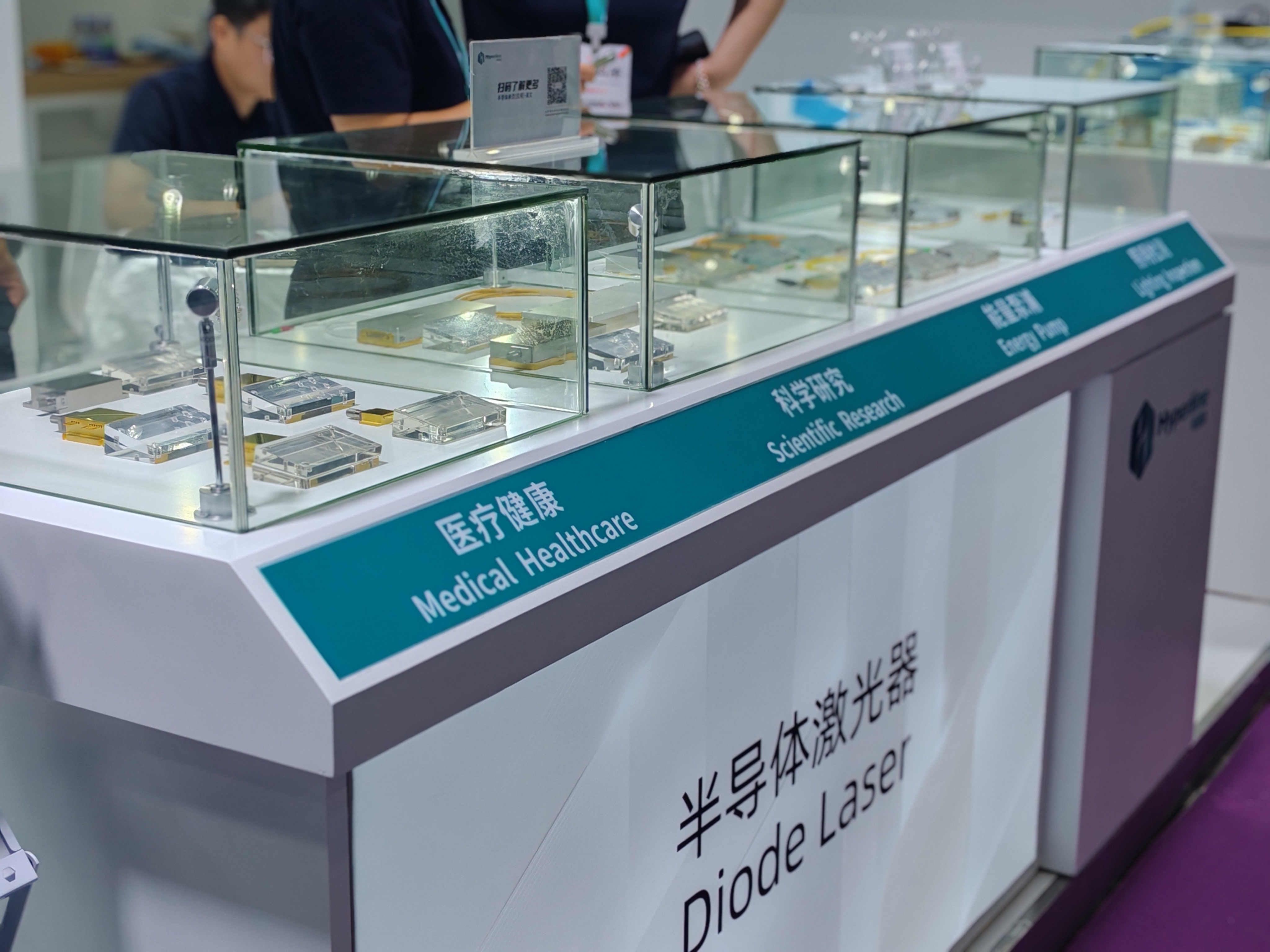
Diode lasers: building the underlying foundation of domestic lasers and serving diverse applications in the AI era
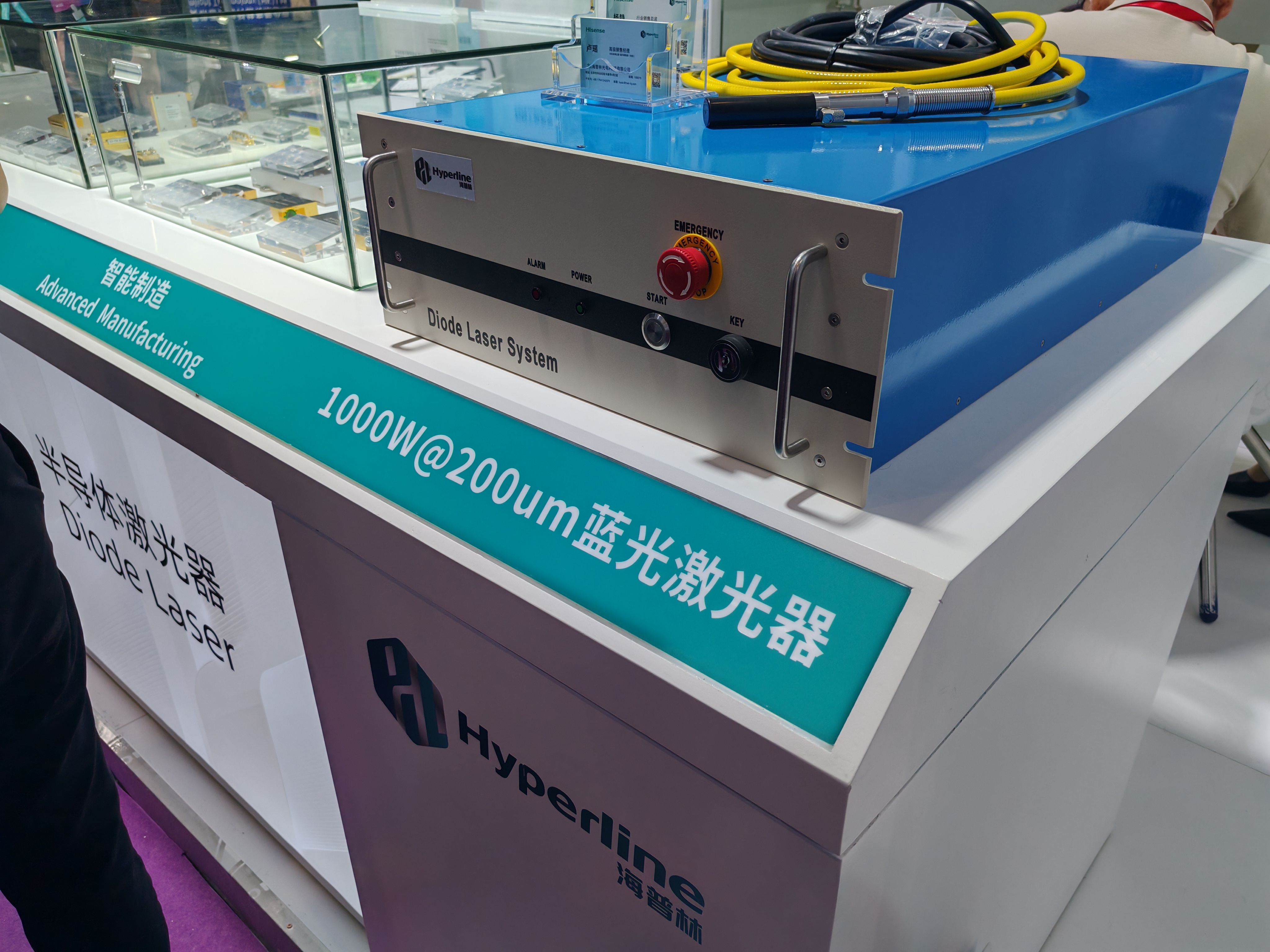
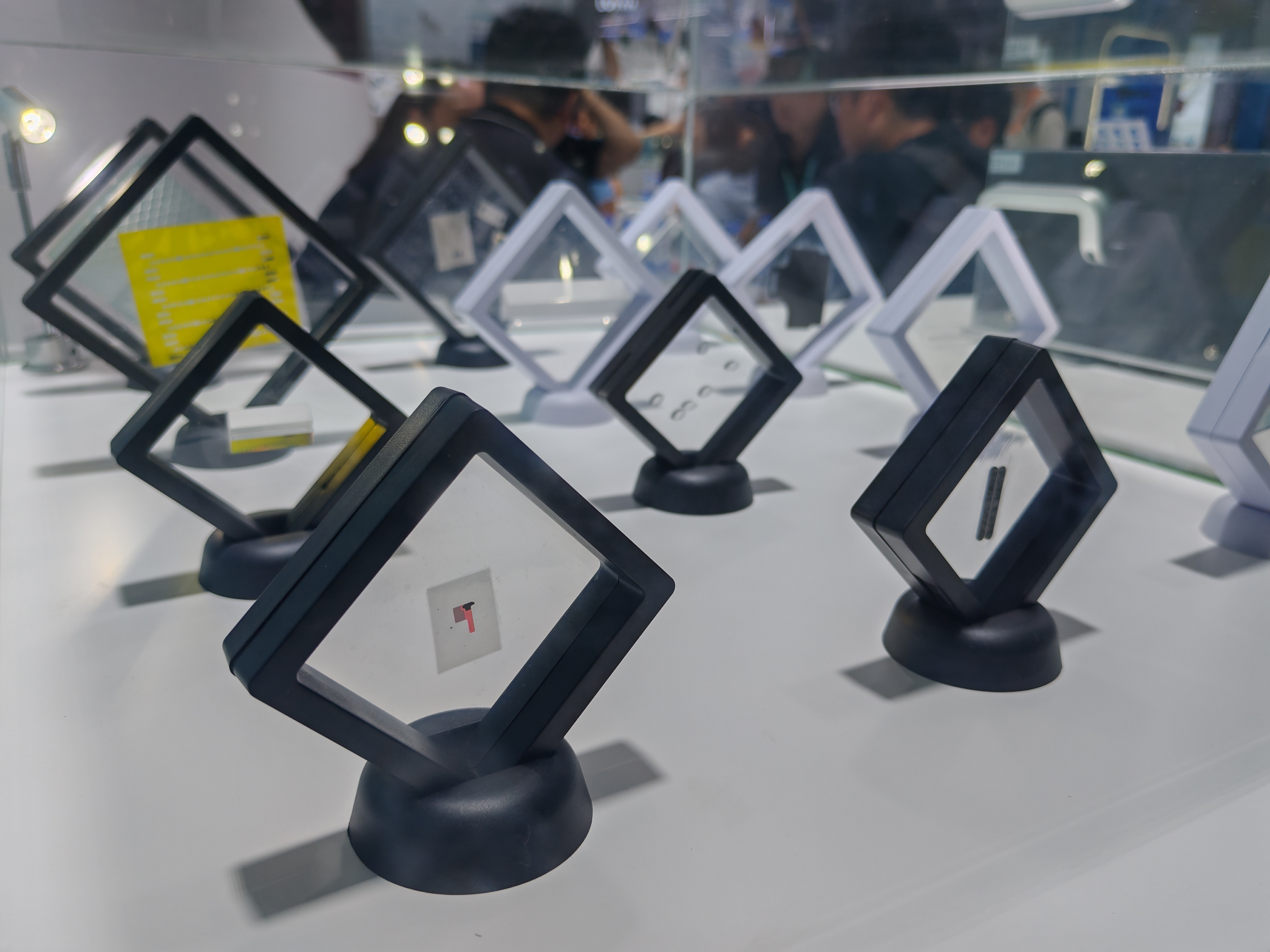
Diode lasers are the core underlying devices of the laser industry, the pump source foundation for fiber and ultrafast lasers, and a key light source in AI computing power, healthcare, and sensing. The diode lasers exhibited this time cover multiple wavelength bands, including 9XX nm pump lasers, kilowatt-class blue semiconductor lasers, and semiconductor modules dedicated to healthcare and sensing and detection. Among them, the high-power blue diode laser greatly improves the absorptivity of highly reflective metals such as copper, solving the welding challenges of power battery and computing power cooling components; multi-wavelength diode arrays and laser bar stacks can serve as self-developed pump sources for ultrafast and fiber lasers, supporting stable system performance and supply chain self-reliance and controllability, and laying a solid foundation for China's domestic laser industry chain.

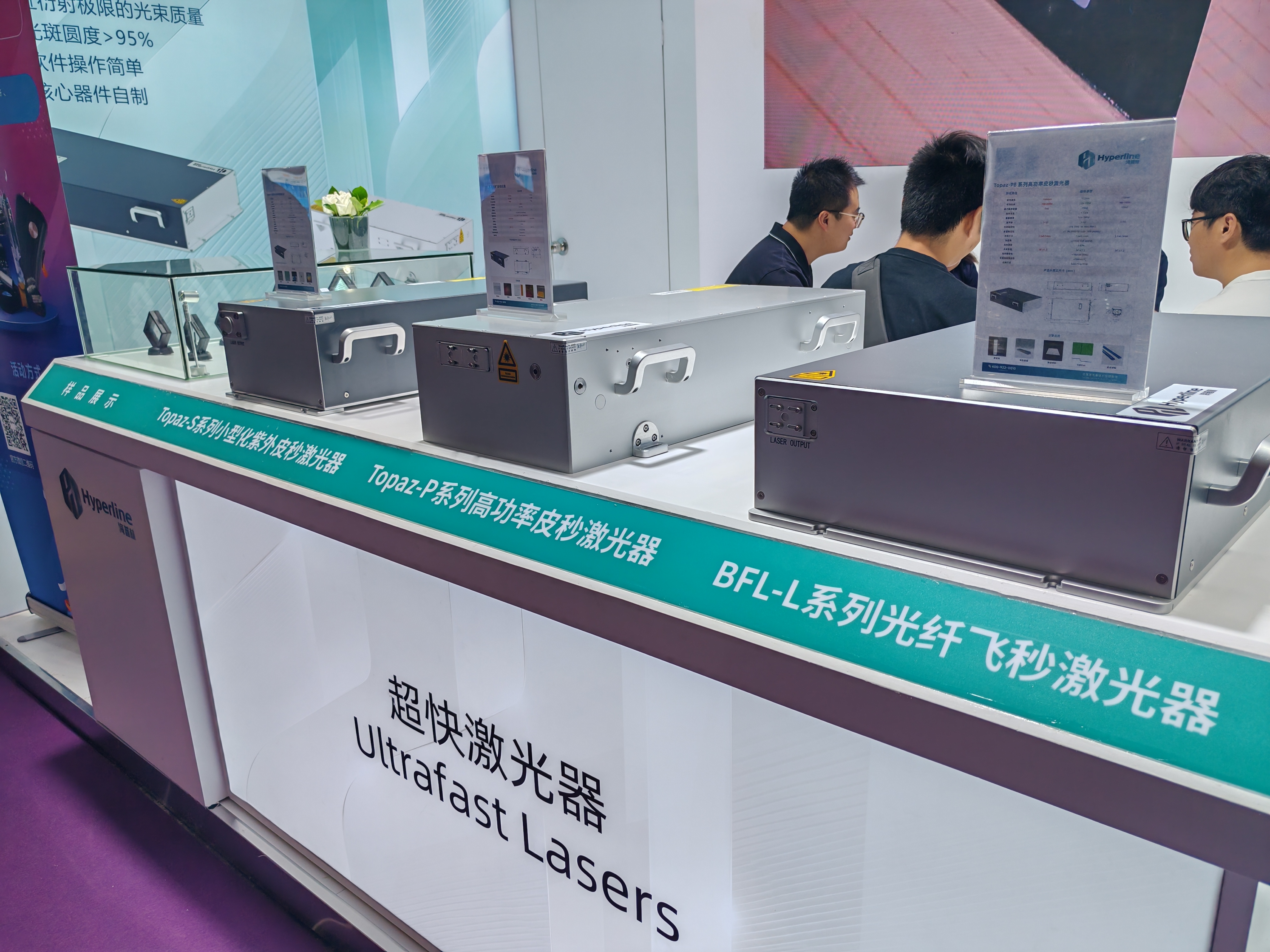
Ultrafast lasers have gradually become the main battleground for domestic manufacturers pushing upward in the high-end precision processing track. Ultrafast business insists on self-developed pump sources, taking a path different from the industry practice of assembling complete machines from purchased core components. It has achieved breakthroughs in key technologies such as dynamic thermal compensation and high-rigidity cavity structures, overcome the thermal lens drift challenge of high-power ultraviolet picosecond lasers, and relies on a modular platform design to move from laboratory technology iteration to mass production while ensuring quality consistency.
At this exhibition, the company highlighted three benchmark ultrafast products: a compact 30 W ultraviolet picosecond laser, an 80 W high-power ultraviolet picosecond laser, and an industrial-grade femtosecond laser. As powerful tools for "cold processing," picosecond and femtosecond ultrafast lasers achieve micro-processing without thermal damage using extremely short pulses, and are widely used in semiconductor wafers, optical components, hard and brittle materials, and PCB microvia drilling, breaking the long-standing monopoly of overseas manufacturers. This marks the transition of domestic ultrafast lasers from the laboratory to high-end industrial production lines, opening the second half of the breakthrough in the ultrafast track.
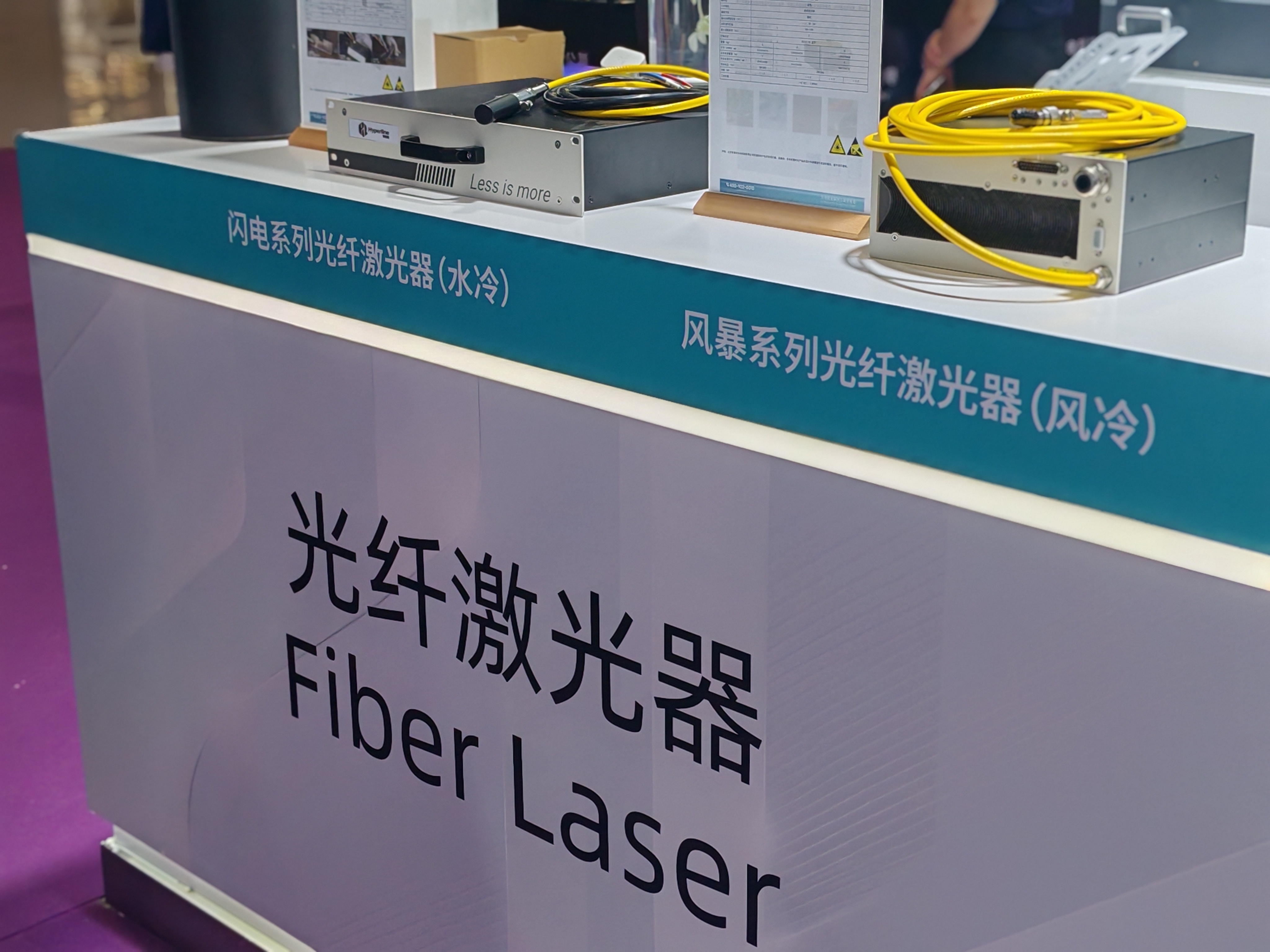
Lightning and Storm series fiber lasers were exhibited together, covering industrial scenarios such as handheld welding, sheet metal cutting, and precision welding for new energy. The products feature a high-efficiency phase-change heat dissipation structure for excellent stability under long-term continuous operation, and an integrated design that balances light weight with high output capability, making them suitable for processing carbon steel, stainless steel, aluminum, nickel, titanium alloys, and other materials. Leveraging its full-chain self-development advantages, keeping iterating its fiber laser products, providing highly reliable and cost-effective domestic light source solutions for new energy equipment and general industrial manufacturing.
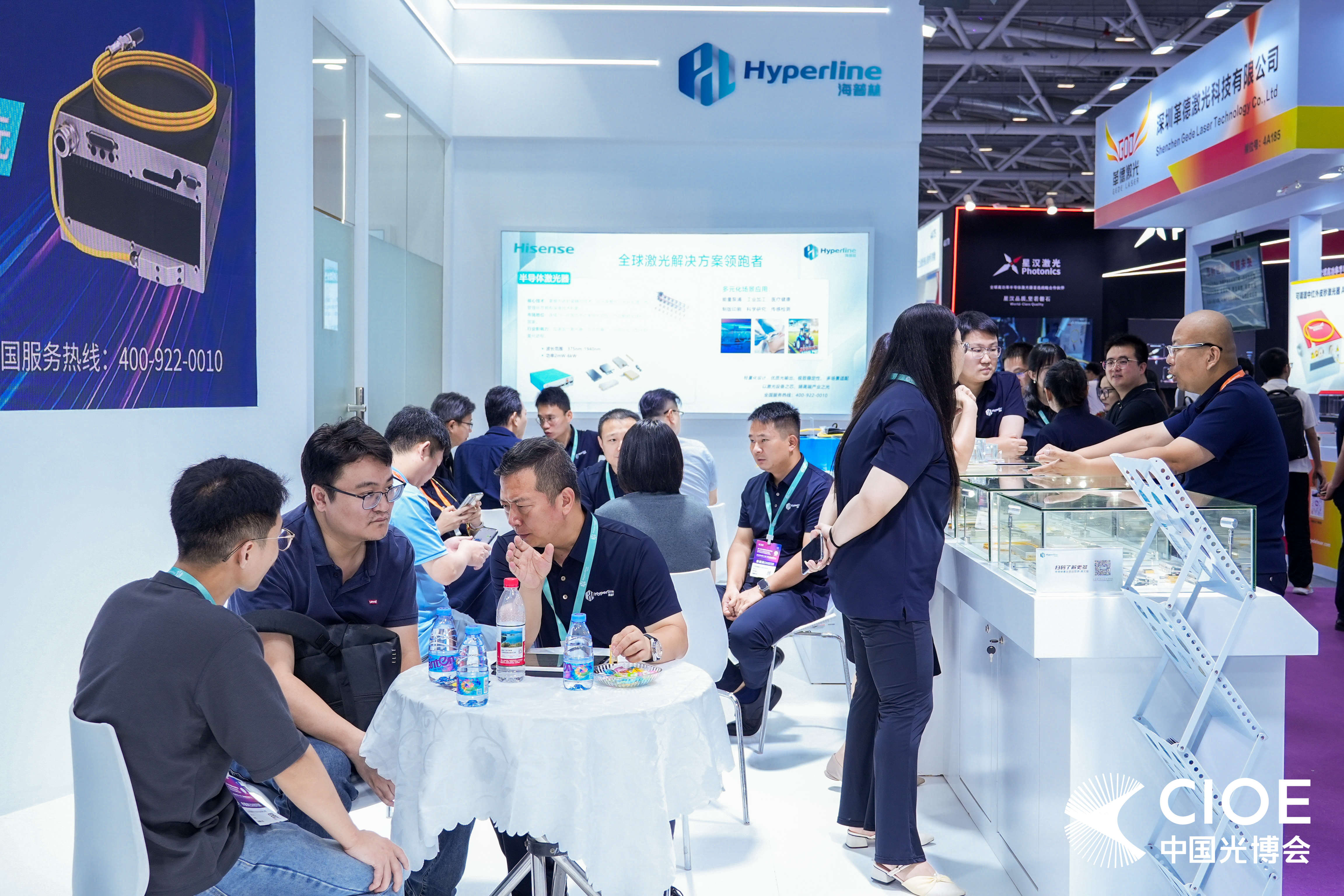
At the exhibition, the booth drew upstream and downstream customers, research institutions, and industry experts, who stopped by for exchanges.
In the AI era, lasers are no longer merely a processing tool but a core underlying light source for high-end manufacturing and the optoelectronic information industry. Hyperline will continue to deepen its focus on the three major laser tracks, uphold self-reliance and controllability of core devices, keep advancing domestic substitution through full-chain technological innovation, empower the development of new quality productive forces, and work with industry chain partners to co-write a new story for China's laser industry.